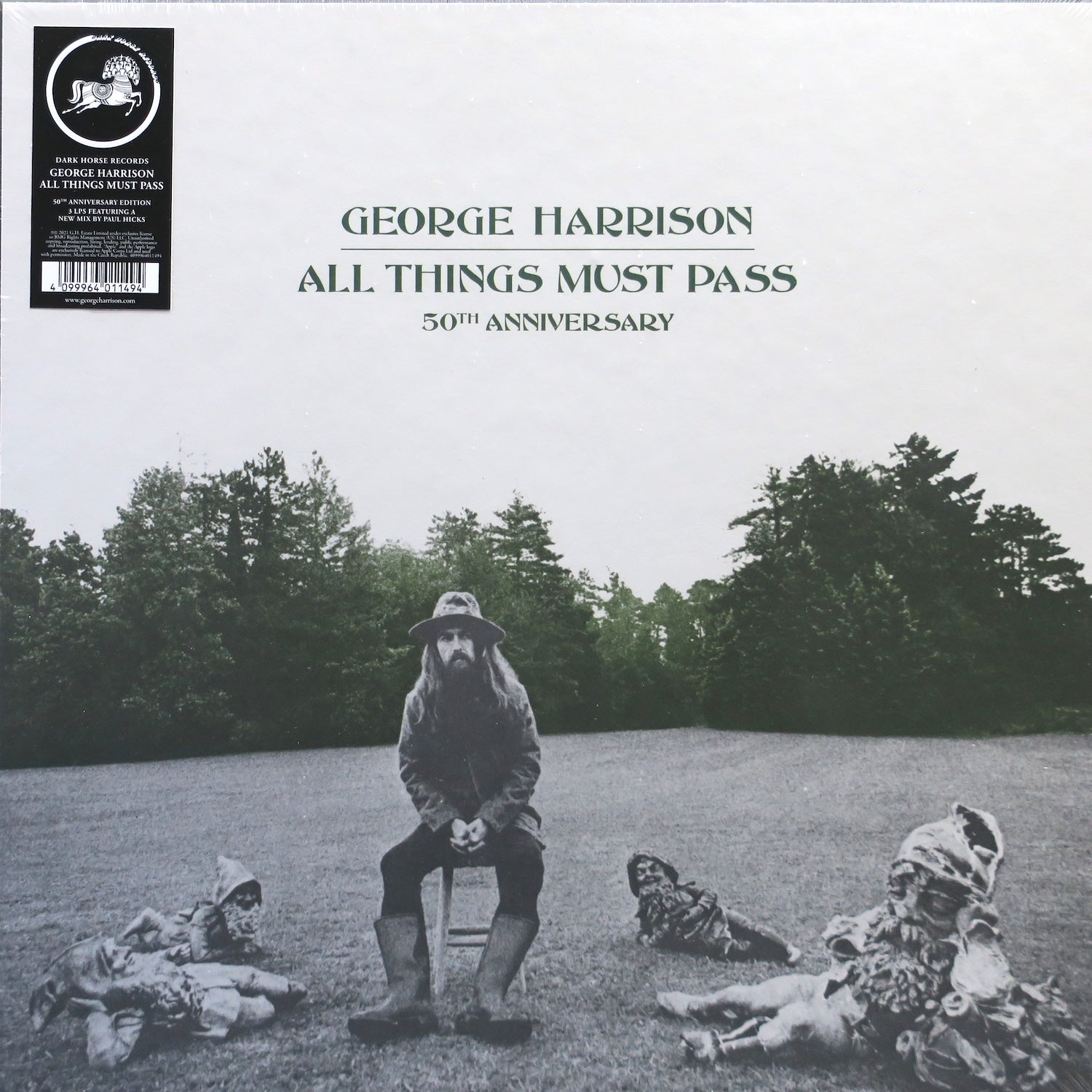
George Harrison
George Harrison's sound is best heard in the spaces between pop hooks: the spare slide guitars, the Eastern modes threaded through a three-minute song, and the quiet insistence of a songwriter who preferred depth over spotlight. His solo career turned private spiritual searching into some of rock’s most melodic, reflective records.
Inside The Beatles, Harrison was often the steadying technical voice — the player who introduced the sitar on Rubber Soul and gave the group a global palette. Writing like "Something" and "While My Guitar Gently Weeps" revealed a lyrical maturity that balanced John Lennon’s caustic wit and Paul McCartney’s melodic drive; those songs also show how collaboration and rivalry with Lennon and McCartney pushed him to develop as a composer. Ringo Starr’s steady drumming was another constant in that band dynamic.
Harrison’s first major solo statement, All Things Must Pass, exploded the idea of the Beatle as simply a member of a group. Co-produced with Phil Spector, it pooled players like Eric Clapton and a cast of session veterans to create widescreen, hymn-like rock. That album, and later Living in the Material World, used big production and intimate songwriting to explore faith, loss, and the pleasures of melody.
His embrace of Indian music through his friendship with sitar master Ravi Shankar altered Western pop’s vocabulary. That relationship led directly to the Concert for Bangladesh, where Harrison’s organizational drive brought together Bob Dylan and other peers for one of rock’s first humanitarian concerts. Those moments show Harrison as a connector — someone whose curiosity reshaped what a pop star could do offstage as well as on.
Later chapters include Cloud Nine, reinvigorated by Jeff Lynne’s production, and the Traveling Wilburys, a loose supergroup with Tom Petty, Roy Orbison, Jeff Lynne and Bob Dylan that celebrated songwriting camaraderie. From slide guitar to spiritual lyricism, Harrison’s catalog rewards close listening: songs that reveal new subtleties on repeated plays and that continue to influence guitarists and songwriters decades on.
His work remains rewarding because it combines technical taste, quiet conviction and an ear for melody — a reminder that sometimes the most powerful statements come in understated, beautifully crafted songs.