Sun Ra
Sun Ra turned the jazz ensemble into a spacecraft: a big-band laboratory where swing, electronics, collective improvisation and theatrical ritual were all tools for imagining other worlds. That theatricality wasn’t window dressing — it shaped the music, giving everything from terse, angular heads to sprawling free-improv textures a sense of narrative and purpose.
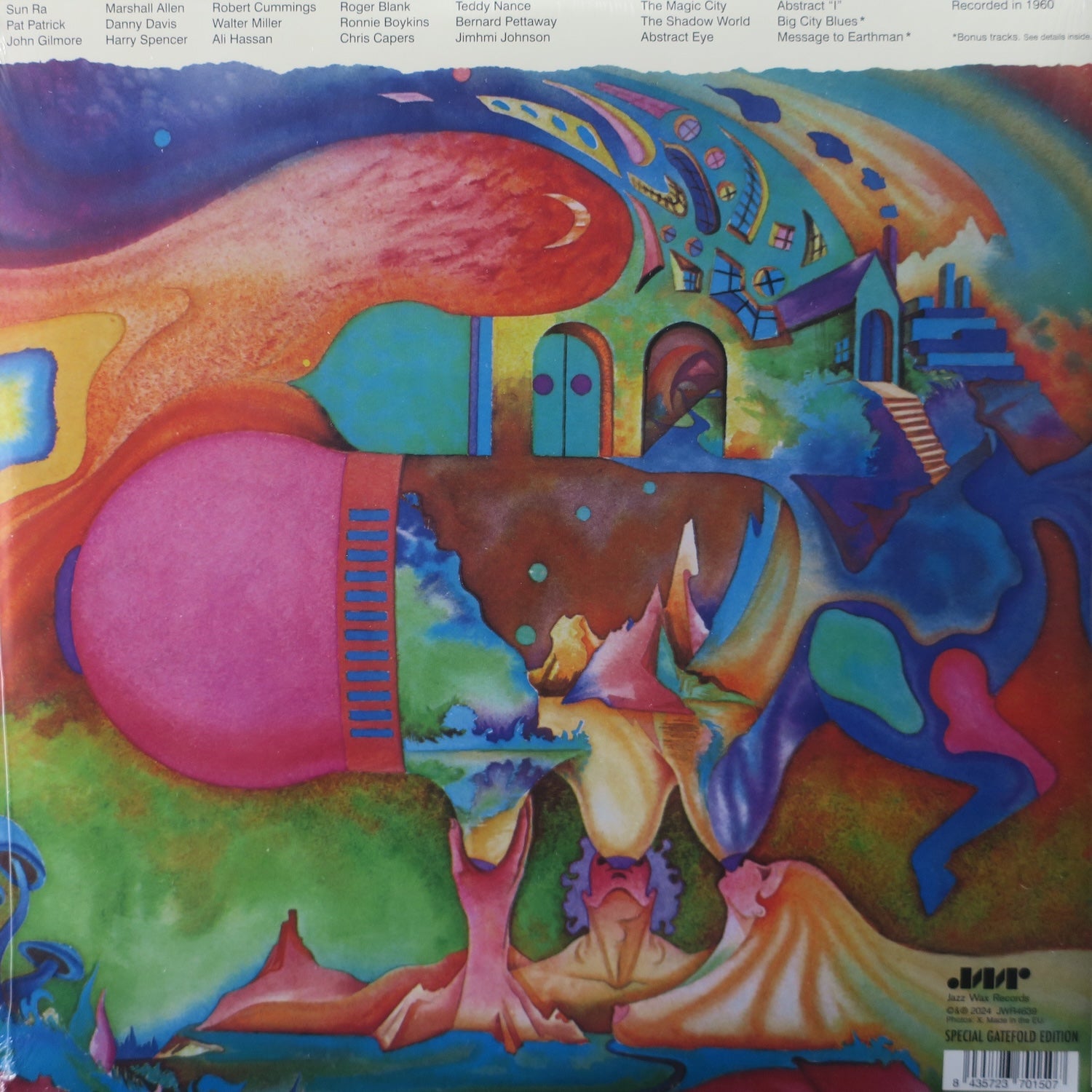
Across decades the Arkestra moved from tight, Ellington-ish arrangements to wild, electronic excursions. Albums like Jazz in Silhouette show the band’s roots in arranged jazz, while The Heliocentric Worlds of Sun Ra and The Magic City push into convolutional composition and tape effects that prefigure later experimental music. Space Is the Place made the cosmic philosophy explicit — music serving as Afrofuturist myth-making as much as entertainment.
Central to Sun Ra’s sound were long-serving players who acted more like co-conspirators than sidemen. John Gilmore’s tenor sax anchored the group’s free stretches with a tone both earthy and relentlessly probing; Marshall Allen later became the Arkestra’s living link to Ra’s performance rituals; Pat Patrick’s baritone added crucial low-end heft; June Tyson’s vocals provided a human, often spiritual counterpoint; and Ronnie Boykins’ bass work underpinned some of the band’s most adventurous recordings.
Behind the scenes, manager and partner Alton Abraham helped build the independent infrastructure — El Saturn Records and a DIY ethos that let Sun Ra release idiosyncratic records on his own terms. That independence and the Arkestra’s stagecraft resonated beyond jazz: George Clinton and Parliament-Funkadelic drew from Ra’s cosmic theatre, while parallel experiments in free jazz by Ornette Coleman and boundary-pushing work by John Coltrane show the same period’s hunger for new forms.
Sun Ra remains compelling because his records are unpredictable maps: listeners can trace a band moving from arranged swing to free improvisation, proto-electronic composition and ritualized performance. For anyone curious about where jazz could go when liberated from expectations, the Arkestra’s catalogue rewards patient listening and repeated surprise.