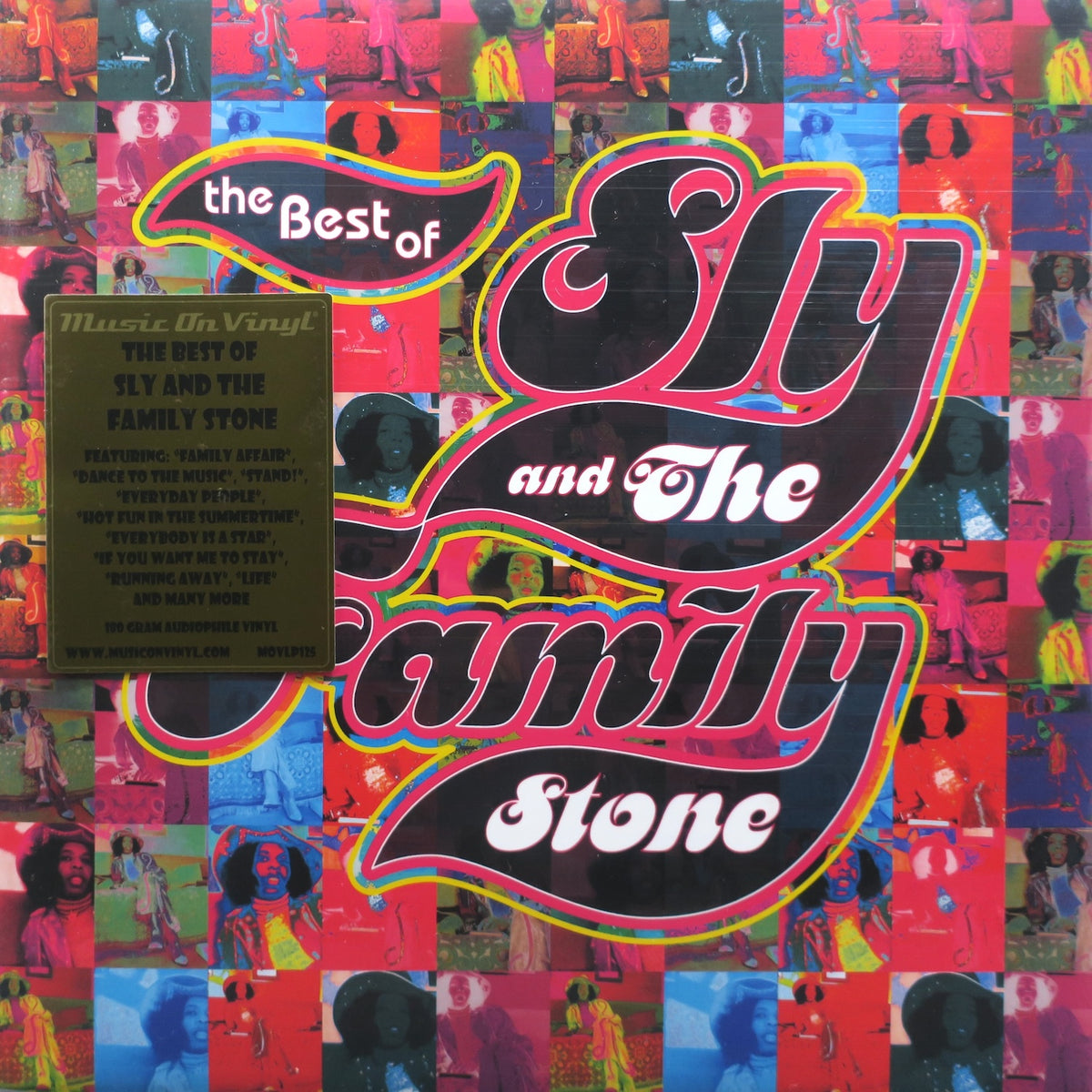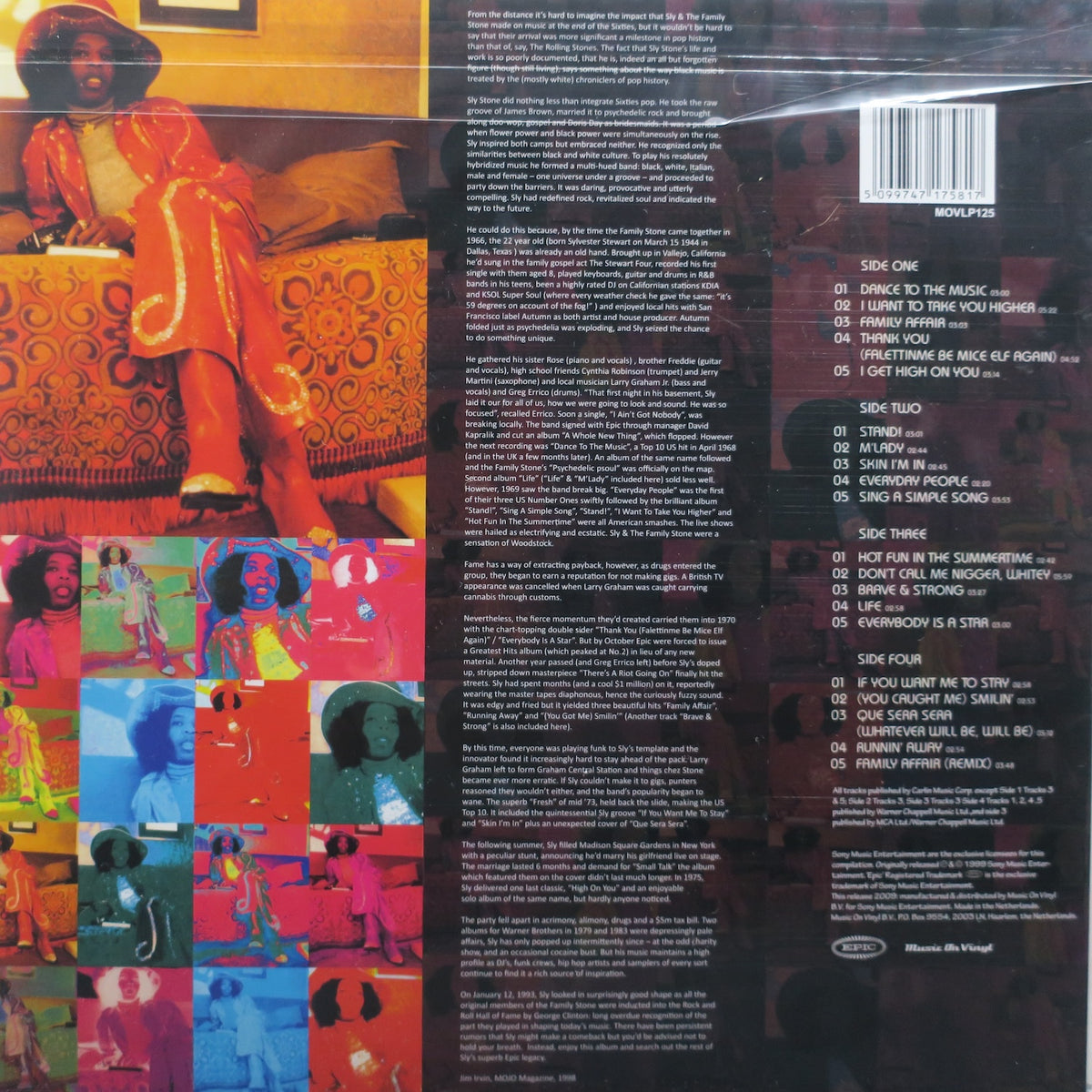
Sly & the Family Stone
Sly & the Family Stone made the whole band feel like a switchboard lighting up at once: bass snapping forward, drums dry and hard, horns answering the voices, everybody shouting as if the chorus had spilled into the street. On "Dance to the Music" they practically assemble the group in front of you, calling in the drummer, guitar and horns one by one until the record becomes a live demonstration of its own engine.
The line-up mattered as much as the songs. Sly Stone put siblings Freddie Stone and Rose Stone beside Larry Graham, Cynthia Robinson, Jerry Martini and Greg Errico in a mixed-race, mixed-gender band at a time when that still carried real charge on American television and stages. Robinson's trumpet and shouted lines cut through like a traffic signal. Graham's bass style, with its thumbed slap and snapped strings, turned the instrument into a lead voice, then carried that force into Graham Central Station.
Their best records are built on togetherness without ever sounding polite. Stand! can preach unity and still hit like a bar band that has had enough of waiting for permission; "I Want to Take You Higher" is less a song than a room being wound tighter with every handclap. The single "Thank You (Falettinme Be Mice Elf Agin)" strips the optimism down to a hard funk chassis, all locked bass and clipped guitar, with the title itself refusing to behave like standard English.
Then There's a Riot Goin' On arrives as the great reversal. By 1971 Sly Stone was using cocaine and PCP heavily, missing shows, and recording in his Bel Air house and at the Record Plant with more isolation and overdubbing than the earlier band records. The album sounds blurred because it was made that way: drum machine ticks, worn tape, voices half-buried, grooves moving as if they have been awake too long. "Family Affair" does not celebrate the family so much as stare at it under low light.
James Brown gave funk its clipped command, but Sly & the Family Stone made it communal, psychedelic and unstable. Parliament-Funkadelic took lessons from that open-door chaos, Prince heard a blueprint for running a whole universe from the front of the stage, and Miles Davis absorbed the dark electric pulse into his 1970s bands. Start anywhere and listen for the handoffs: the bass pushing the floor, the trumpet cutting the air, the voices arguing their way into one body.
Recommended Artists: The Isley Brothers, The Meters, Prince, James Brown, Curtis Mayfield, Stevie Wonder, Isaac Hayes, Cymande, Marvin Gaye