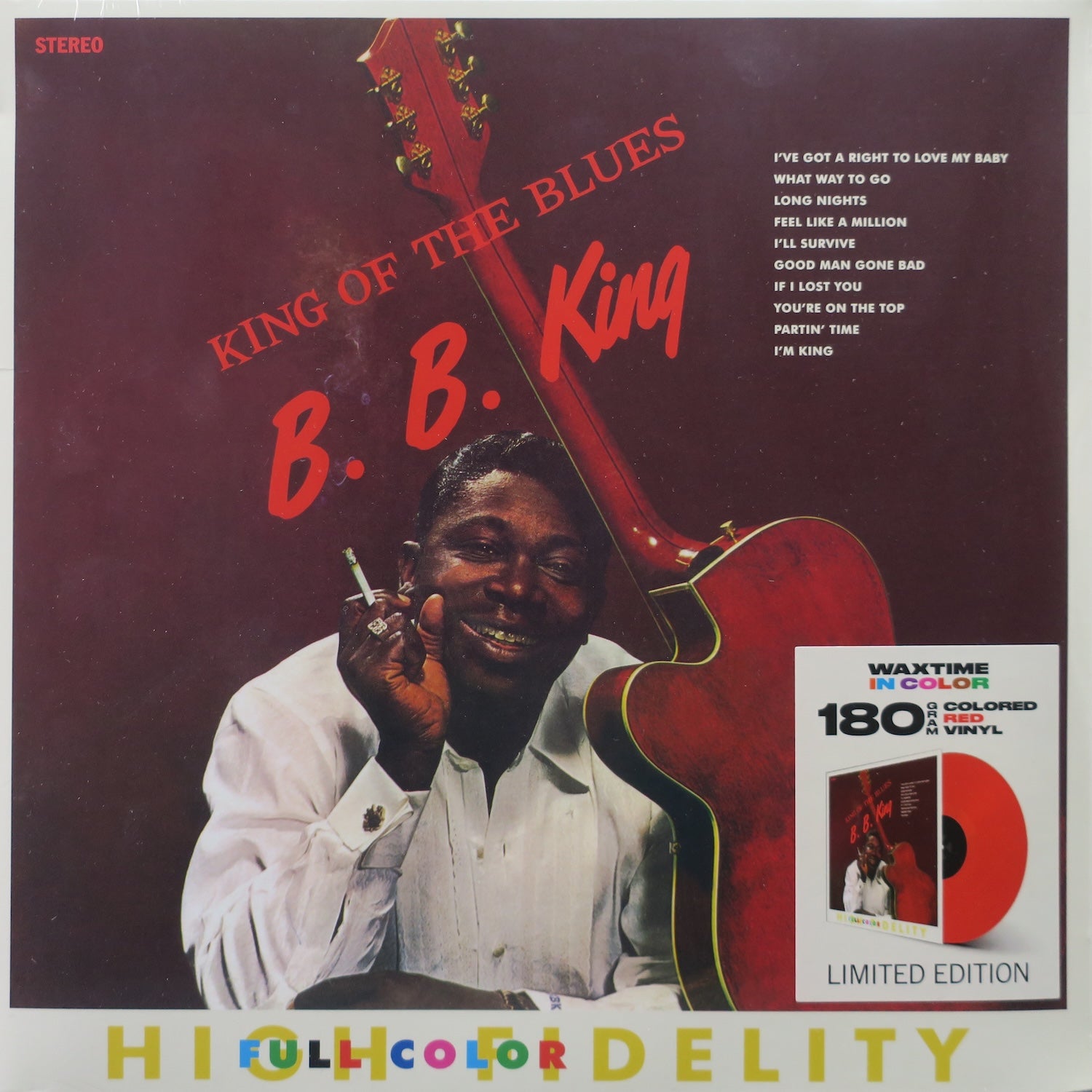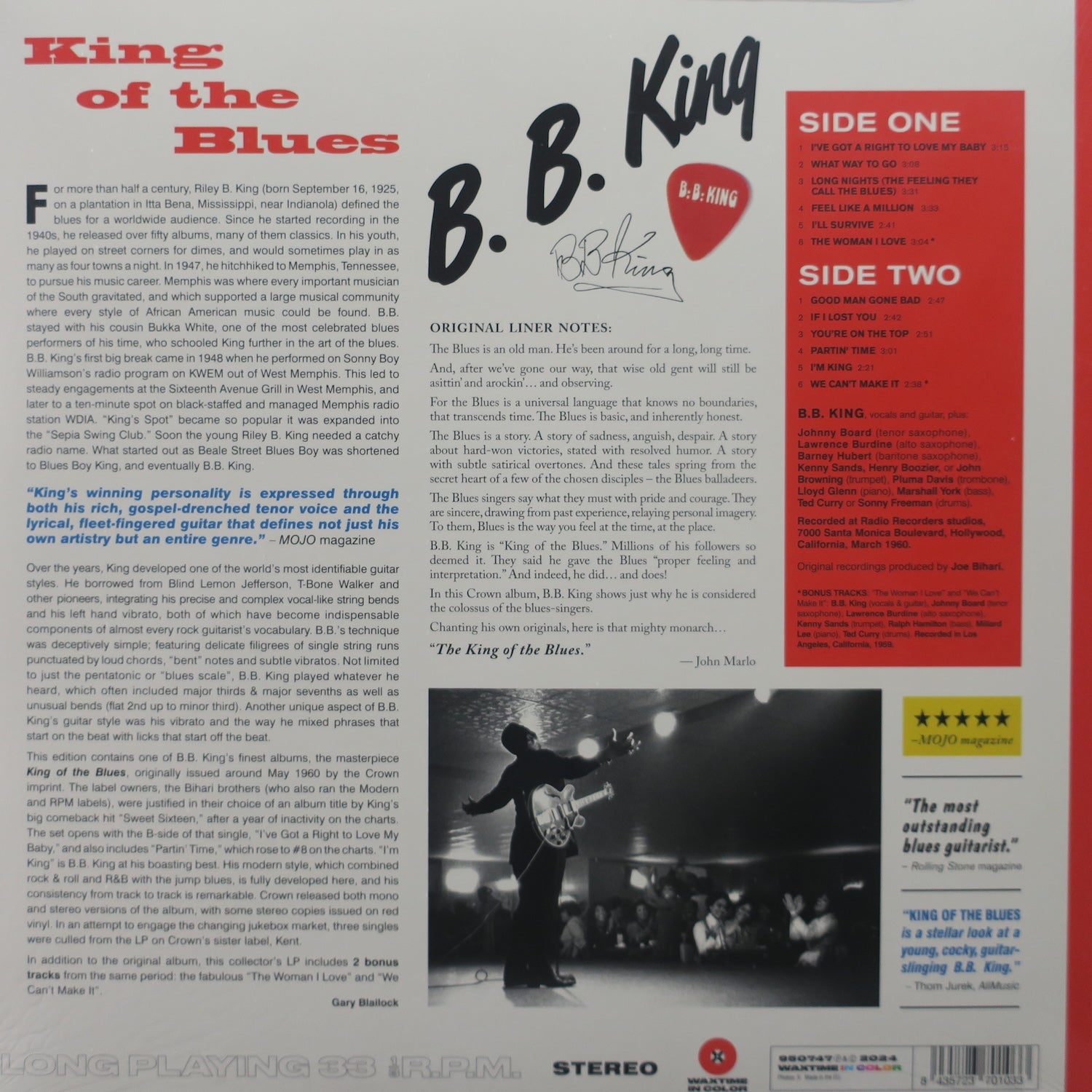
B.B. King
Few blues guitarists made phrasing feel like a conversation the way B.B. King did. His single-note lines, deliberately bent notes and vocal-like vibrato turned simple scales into sentences, and that approach reshaped how electric guitarists thought about melody and space.
King's tone and timing were inseparable from his instrument, Lucille—a name that became shorthand for a warm, singing electric guitar voice. That voice is present across landmark records such as Live at the Regal, where a compact band lets King's nuances breathe, and Completely Well, which contains his most widely recognized studio hit, "The Thrill Is Gone." Those records demonstrate how blues could be intimate and dramatic without losing its dance-hall roots.
The band behind the guitar was crucial: horn charts, a steady rhythm section and tasteful piano filled out arrangements so King's solos sat in relief rather than domination. That ensemble approach made his live shows feel like a communal experience and helped his music reach listeners beyond traditional blues audiences. Live in Cook County Jail and later collaborations kept that balance between emotional directness and polished presentation.
King sat at a crossroads between earlier jump-blues players and the rock-era guitar heroes who followed. T-Bone Walker's jazz-tinged single-note playing is an audible antecedent, while later artists such as Eric Clapton and Stevie Ray Vaughan absorbed King's phrasing and public persona and took it into rock contexts. Clapton's joint album with King, Riding with the King, is itself a document of musical friendship that frames King's style next to a generation that grew from it.
Understanding B.B. King's career is to see how blues could adapt: the small-band club sound of his early years grew into arena-ready presentations without losing a conversational center. His influence on phrasing and on making the electric guitar mimic human expression is the reason his records continue to be revisited. Those who start with Live at the Regal or Completely Well will hear both the plain emotional logic of the blues and the craft that made King's playing a model for guitarists across genres.